How to Check Whether a Home Weather Station Is Measuring Well
You cannot certify a home weather station with one glance at its display. You can, however, perform a useful plausibility check: document the sensor’s exposure, confirm units and time, inspect maintenance, comp
You cannot certify a home weather station with one glance at its display. You can, however, perform a useful plausibility check: document the sensor’s exposure, confirm units and time, inspect maintenance, compare like with like, and record what remains uncertain. The result is an evidence-aware check, not professional calibration or proof that a station meets an official network standard.
Start with the sensor location
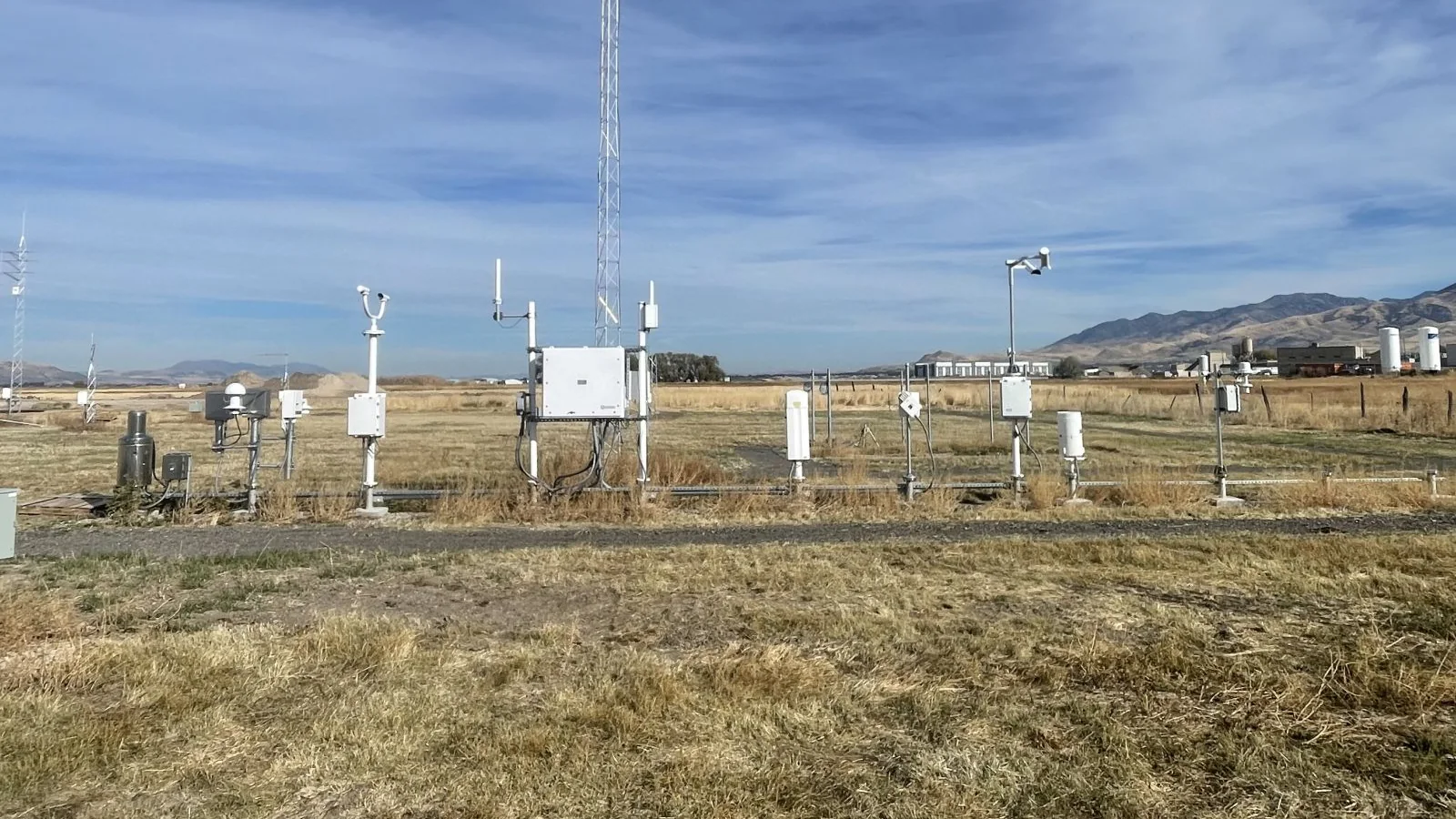
Write down where each sensor is mounted, its height, nearby surfaces, shade, ventilation and obstructions. A temperature sensor beside a wall, roof, air-conditioning outlet or dark paving may measure a different local exposure from a sensor over representative ground. A wind sensor beside a building may record disturbed flow.
NWS cooperative-observer guidance recommends a level, open, ventilated setting for temperature and warns that nearby obstructions influence readings. Use that guidance as a comparison target, not as a claim that every backyard can reproduce an official site.
Check five inputs before judging a number
- Time: Is the station clock correct, including daylight-saving or time-zone settings? A correct value assigned to the wrong hour can mislead a comparison.
- Units: Confirm Celsius versus Fahrenheit, millimetres versus inches, and the displayed wind-speed unit.
- Exposure: Note sunlight, shelter, height, surfaces and nearby heat sources.
- Maintenance: Inspect the radiation shield, rain collector, batteries, cables, debris and insects according to the manufacturer’s instructions.
- Context: Record whether the reading is an instant value, an average, a maximum, a gust, or an accumulated total.
Do not skip the fifth item. “Wind 18” is not interpretable until the unit, averaging period and gust status are known.
Perform a cautious co-location check
If you have a second instrument, place both in the same shaded, ventilated location for a limited comparison. Let them adjust according to their manuals, then record the time, readings, units and conditions. A small difference may be normal instrument resolution; a persistent large difference deserves investigation.
Do not silently subtract an offset from every future reading. The co-location exercise can reveal a problem, but it does not by itself identify which instrument is correct or create a laboratory calibration.
Make a completed check record
> 16 May, 18:20 — temperature sensor check. Sensor A: 19.1 °C; comparison sensor: 18.9 °C. Both shaded, 1.5 m above grass, same Celsius unit; readings taken after 20 minutes in place. Station shield intact. Clock matched to local time. Result: small difference observed; no calibration conclusion.
That record is useful because it states the setup and the limit. A less useful note would be “station accurate,” which claims more than the check established.
Investigate implausible results
If a station reports an extreme value, check the simple explanations first: wrong unit, stale battery, clock error, sensor in direct sun, blocked rain funnel, lost wireless connection, or a display showing a daily maximum rather than current conditions. Compare the timestamp and context before comparing numbers.
For rainfall, inspect the collector and its level, note debris or overflow, and compare the accumulation period. For humidity, note ventilation and condensation. For wind, record obstruction and whether the display shows a gust or an average. Different variables fail in different ways; one plausible temperature reading does not validate every sensor on the station.
Compare the right quantity
An official observation may report a two-minute wind average while your display is showing a three-second gust. A rain gauge may show an accumulated total since midnight while a public page shows the previous 24 hours. A temperature comparison can also fail when one number is an instant reading and the other is a daily maximum. Before deciding that the station is wrong, write the definition of each value.
A good comparison record therefore has two columns for the measurement and two more for the context: value and unit, then averaging or accumulation period and timestamp. Add the site description beside both. This structure makes a disagreement visible without pretending that all products use the same observation convention.
Use a nearby station carefully
A nearby official station can provide context, but it is not a perfect control. It may sit at a different height, surface, exposure, elevation or distance from a shower. A difference between stations can be real, and a match does not prove that your sensor is accurate. Label the comparison as contextual rather than as a pass/fail test.
For example: “Home sensor 22.4 °C at 13:00 beside shaded grass; official station 21.8 °C at 13:00, different exposure and elevation. Difference noted; cause not determined.” This is stronger than writing “home station is 0.6 °C high” after one pair of values.
Review a week instead of one display moment
Make a short review table with timestamp, home value, comparison value, site context, and any maintenance note. Look for repeated patterns: differences only in direct sun, rainfall totals changing after a leaf blockage, or wind discrepancies only when the sensor is behind a wall. Repeated patterns suggest what to inspect; they do not prove a correction factor.
If you move the station or replace a sensor, start a new series and mark the date. A continuous graph can be visually attractive while hiding a change in method. Metadata keeps the graph interpretable.
Finish with a decision, not a score
At the end of the check, choose one of three outcomes: plausible under documented conditions; needs investigation; or not interpretable because a required context field is missing. These labels are more honest than a percentage score invented from one comparison. Explain the next action beside the label: clean the collector, correct the clock, improve exposure, repeat a co-location check, or consult the model documentation.
The purpose of a home station is to make local weather more visible and comparable over time. A careful record can do that even when the setup is imperfect. Its usefulness comes from transparent limits, not from claiming a precision the site and method cannot support.
Keep a maintenance history
Add a line when you clean a rain collector, replace a battery, move a sensor, update firmware, or change the surrounding site. A measurement series with an undocumented move is not automatically continuous. Mark the break and begin a new comparison period if necessary.
WMO exposure guidance emphasizes that the reliability of an observation depends not only on instrument uncertainty but also on how the instrument is exposed. That is why metadata belongs in a weather journal even when the device is working normally.
Know the escalation boundary
Stop short of calling a home station professionally calibrated, climate-quality, or officially network-compatible unless the responsible programme has verified those claims. If you need data for a safety-critical decision, use the relevant official observation and warning services. If the station remains implausible after checking location, units, time, maintenance and comparison conditions, consult the manufacturer’s technical documentation or a qualified service rather than inventing a correction.
The finished check should answer a modest question: “What evidence suggests this reading is plausible, and what remains unknown?” That answer is more valuable than a false certificate of accuracy.
That is the standard a personal weather journal can realistically meet. It is transparent, repeatable, and useful without pretending to be an official certification.
Keep the decision attached to the measurement record.